What Is Google AdSense?
What Is Google AdSense?
Google AdSense is a free advertising program that allows online publishers to earn money by displaying third-party Google ads on their sites.
Businesses pay to advertise through AdSense. And site owners receive a share of that revenue based on clicks or ad impressions.
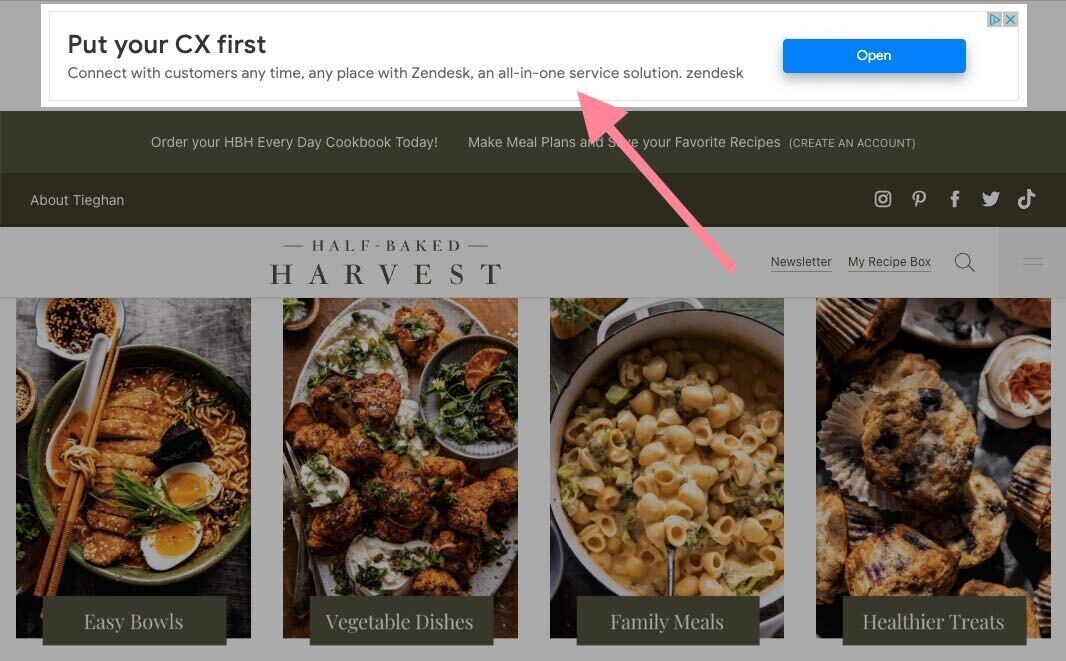
This is what a Google AdSense ad can look like on a website:
Pro tip: Boost your AdSense earnings with Semrush’s suite of SEO and digital marketing tools. Claim your free account:

How Does Google AdSense Work?
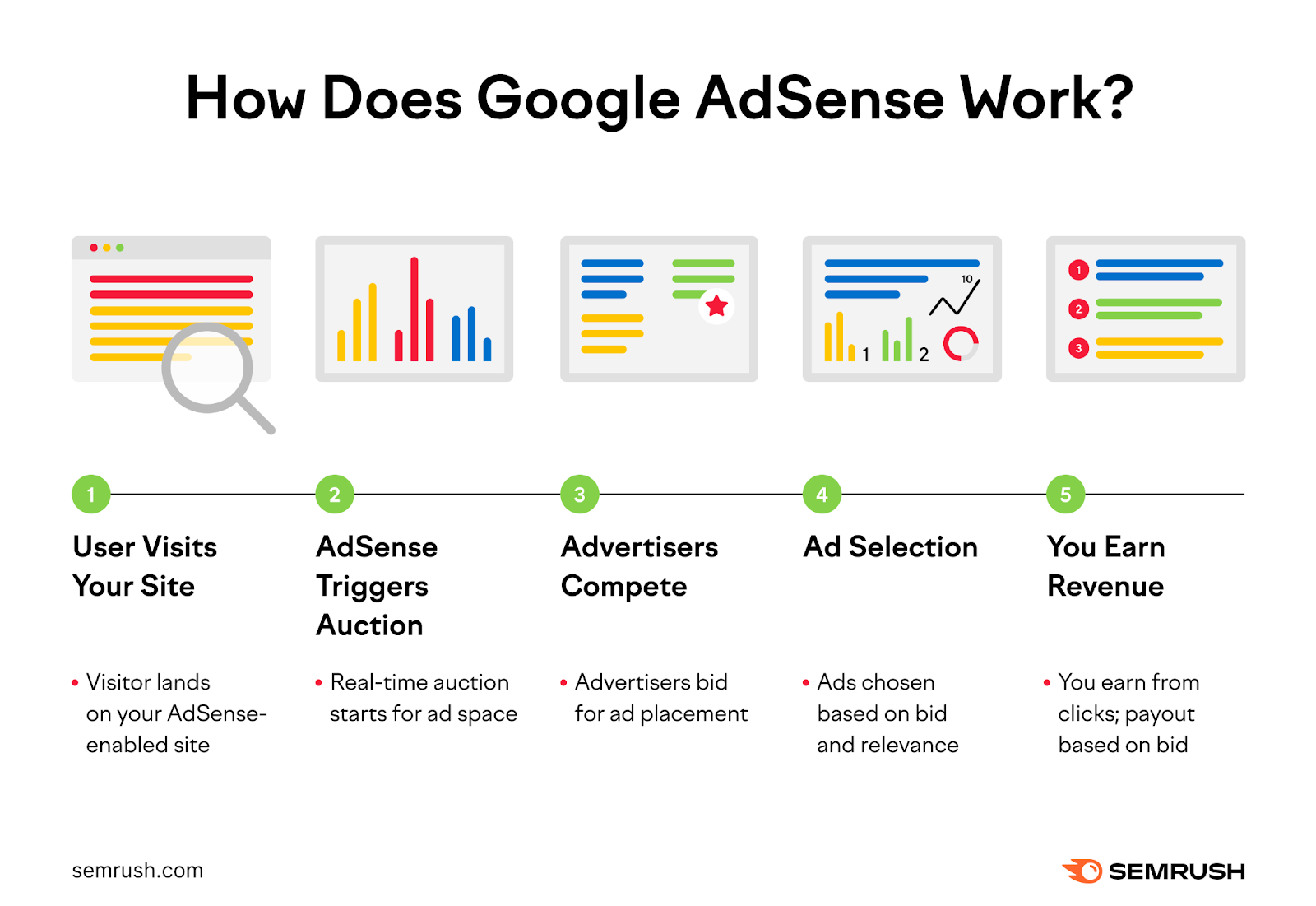
Google AdSense uses an auction system to place ads on your website. When you use AdSense, you allow advertisers to bid for ad space on your site. This happens in real time whenever someone visits your page.
Here’s how it works at the backend:
Understanding the Auction
When a visitor arrives at your site, AdSense instantly triggers an auction.
Advertisers who have indicated a desire to reach your audience automatically compete in this auction to display their ads.
They place bids—amounts they're willing to pay for every click on the ad.
The Role of Ad Quality and Bid Amount
The highest bidder does not always win the auction. Google also evaluates the relevance and quality of each ad.
An ad more relevant to your visitors might win over a higher bid.
This ensures that the ads displayed are useful to your audience. Which can lead to higher engagement and earnings for you.
You Get Paid
You earn money when visitors interact with the ads, typically through clicks.
The actual amount you earn per click depends on the auction's winning bid.
Google AdSense pays you monthly through direct deposit once your earnings reach the minimum threshold.
Google AdSense vs. Google Ads
Google AdSense and Google Ads (formerly known as Google AdWords) are two entirely different services.
AdSense is a website monetization program. It lets website owners or publishers monetize their websites or blogs by displaying ads.
Google Ads, on the other hand, is an advertising platform. It helps businesses and individuals promote their products or services on Google's advertising network. This includes:
- Google Search
- YouTube
- And the websites that have signed up for Google AdSense
The key difference is that AdSense lets publishers earn money by placing ads, while Google Ads lets advertisers pay to show ads on its network.
Pros and Cons of Google AdSense
Google AdSense offers a straightforward way to earn money from your website. But it requires careful management of ads to avoid compromising user experience.
Pros
- Easy to set up: You can start displaying ads quickly after a simple signup and site verification process
- Access to a large pool of advertisers: Advertisers globally use Google Ads to bid on your ad space in real-time, which increases the chances of selling more ads and higher bids
- No need to directly deal with advertisers: AdSense handles all interactions with advertisers, so you don’t have to negotiate prices or manage relationships
- Wide range of ad formats: AdSense accepts several ad formats, which can help you experiment and control your ads to increase CTR and provide a good user experience
- Regular payments: As long as you meet the minimum monthly threshold, AdSense will provide a monthly payment. In months when you don't, the amount you earned carries over to the next month.
- Highly reliable: AdSense is backed by Google, so you can trust that the payments will come through as agreed
Cons
- Revenue depends on traffic and ad clicks: Websites with low or inconsistent traffic might struggle to make money with AdSense, as impressions and ad clicks determine earnings
- Minimum payout threshold: You need to earn at least $100 before you get paid, which can be challenging for smaller sites. This threshold varies based on your location and currency. It's C$100 for CAD, €70 for EUR, and £60 for GBP.
- Can impact user experience: Too many ads can make your site’s user experience worse, which can hurt your SEO and lead to lower search rankings
- Limited control over ad content: While you can block certain categories, you cannot choose to work with specific brands or campaigns. This could mean showing ads that don’t align with your brand or audience preferences.
- Risk of invalid clicks: Your account can face suspension if Google detects unusual click patterns. This includes accidental clicks from you or your team or malicious clicks from competitors.
- Account suspension risk: Google has strict ad placement and site content policies. Any violations can lead to account suspension, which can disrupt your earnings.
How Much Can You Earn With AdSense?
You can’t really know how much money you’ll make with AdSense until you try it. The amount depends on many factors, like:
- How much traffic you get
- Your niche
- Where searchers are located
- Where ads are displayed on your site
- What kinds of ads you choose to display
- The current digital ad market
But you can get rough estimates. First, try out AdSense’s revenue calculator.
Set your visitor location and site content category (finance, games, health, etc.). And you’ll get a projection of what your annual revenue can look like.
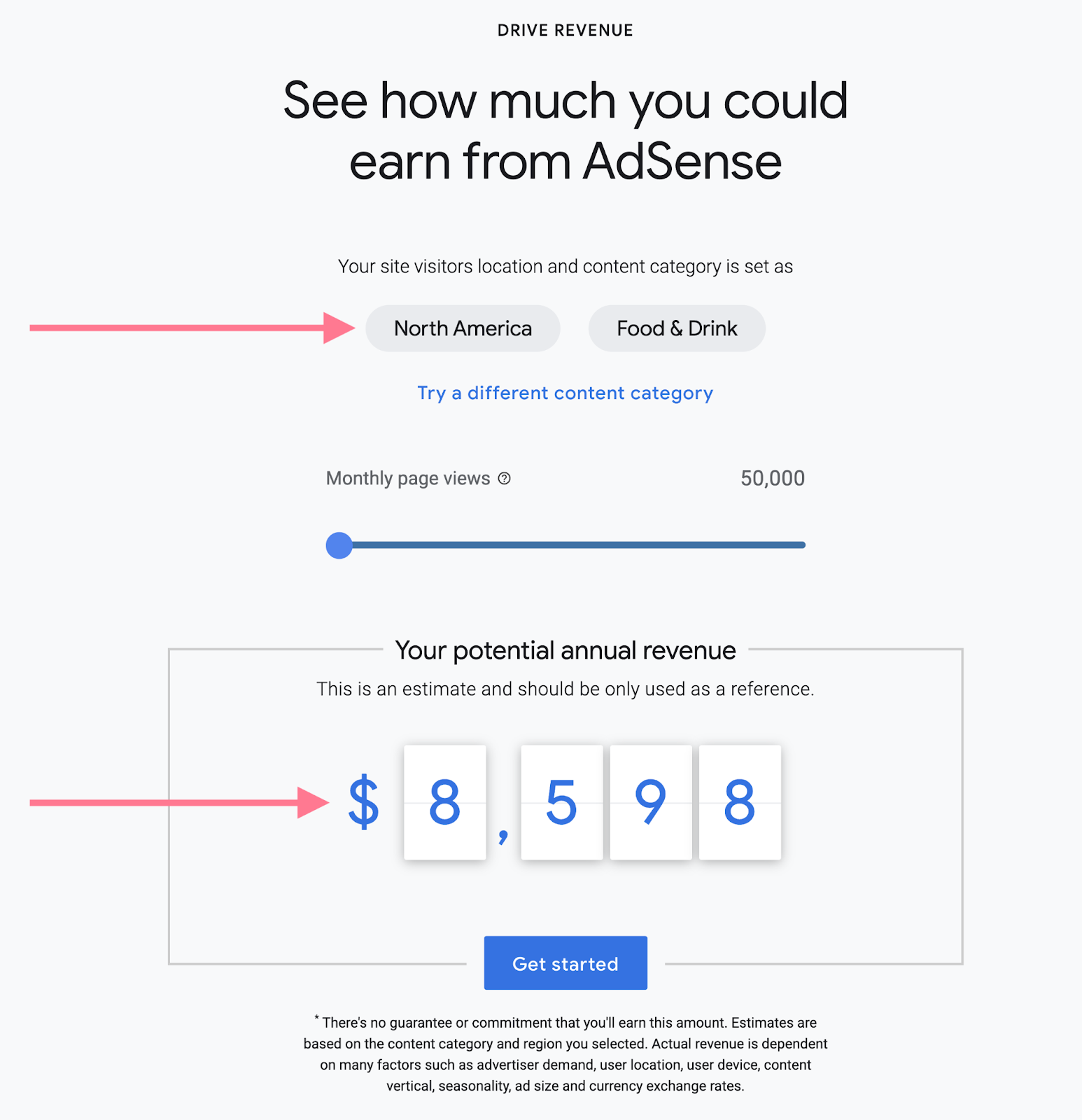
Toggle the “Monthly page views” slider to see how much you could potentially make based on views.
Want to know a little more about how AdSense calculates your earnings? There are two basic models:
- Per click
- Per impression
To calculate per-click commissions, AdSense looks at how often users click the ads on your site and multiplies that by cost per click (CPC).
CPC measures how much an advertiser pays each time a user clicks on an ad. In this case, an ad on your site.
To calculate per-impression commissions, AdSense looks at how often users see the ads on your site and multiplies that by cost per mille (CPM).
CPM measures the cost an advertiser pays for 1,000 impressions or views of an ad.
Various factors, such as your niche, the ad units and formats you use, and your location, will also play a role in these calculations.
AdSense revenue calculators can give you an idea of what you might earn with AdSense. But you won’t know exactly how much you can earn with AdSense until you actually start using it.
Requirements for Using Google AdSense
Google AdSense requires that your site meets specific standards to ensure a positive user experience and adherence to legal guidelines.
Here are the essential criteria your site must fulfill to participate in AdSense:
- You must be at least 18 years old to create an AdSense account. Otherwise, a parent or guardian must sign up on your behalf.
- You must own the site or have access to its HTML source code
- Your content and site must comply with all AdSense program policies. Including not using scraped content, adult material, or copyrighted material without permission.
- Your site must contain high-quality, original content that engages and provides value to visitors
- You should moderate user-generated content like comments to avoid policy violations
- Your site's navigation should be clear and easy to use for a better user experience
- If you use Blogger or YouTube, you must meet additional AdSense requirements specific to these platforms
Types of Google AdSense Ads
Google AdSense offers five types of ads.
Display Ads
Display ads on Google AdSense can appear in square, horizontal, or vertical formats on a webpage.
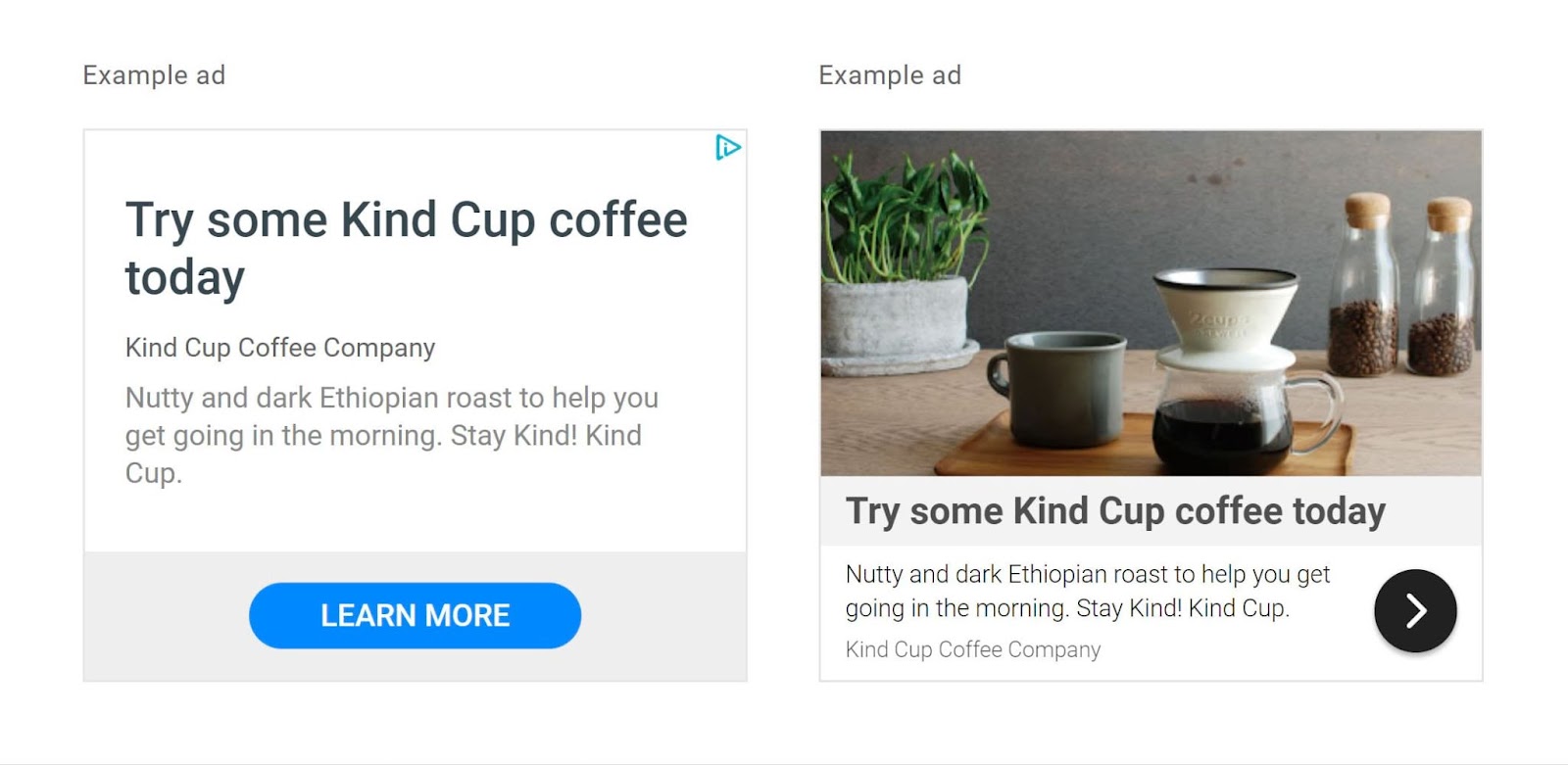
They automatically adjust their size to fit the viewing area. Making them suitable for various positions, such as sidebars, footers, or between content paragraphs.
This flexibility ensures that the ads maintain functionality and aesthetic appeal whether viewed on a desktop or a mobile device.
While responsive by default, you can also set them to fixed sizes to maintain a specific layout.
In-Feed Ads
In-feed ads are native advertising that blend seamlessly into your website's content. Such as within a list of articles or products.
These ads match the look and feel of the surrounding content. Which makes them less intrusive and more engaging for users as they scroll through a site.
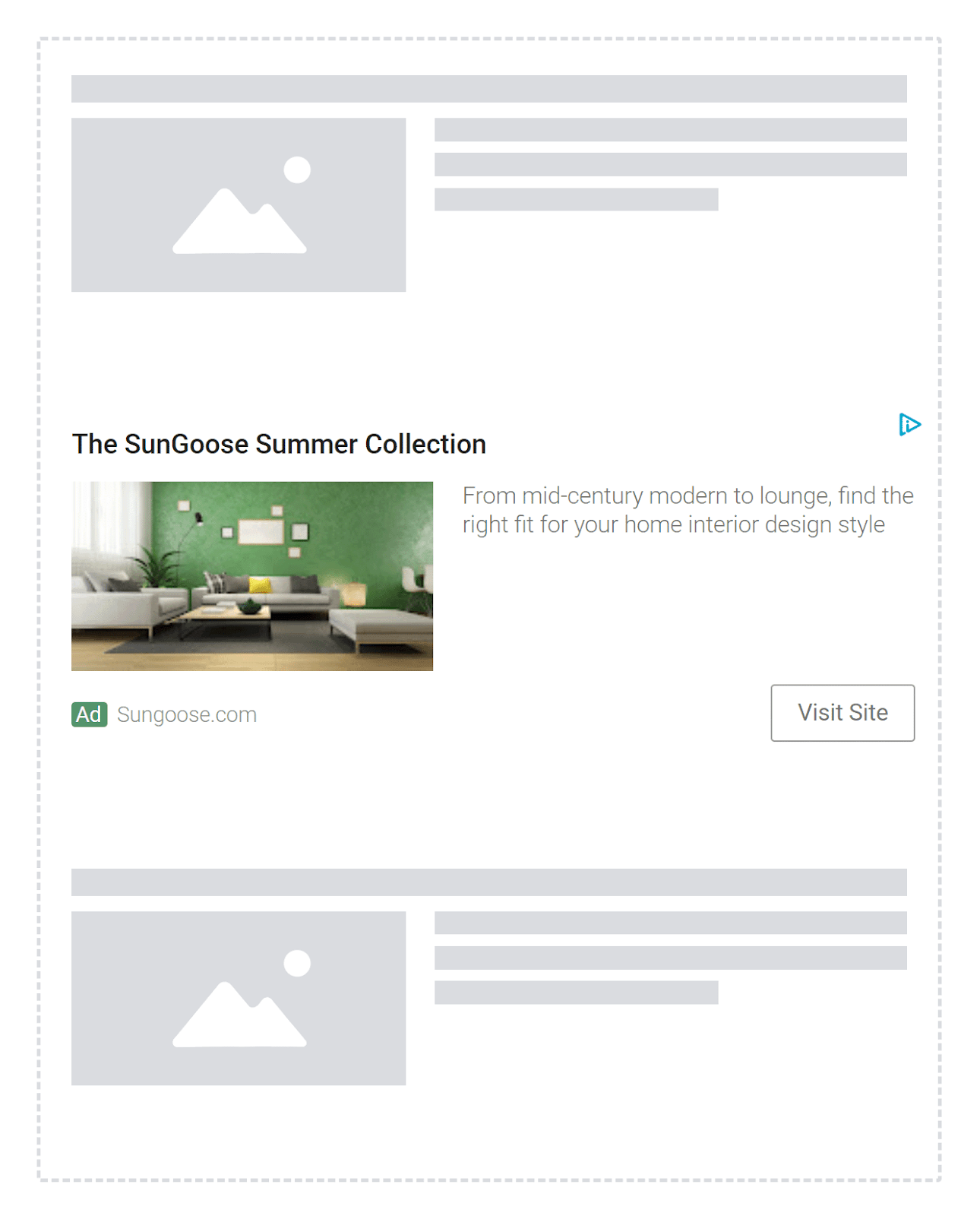
They are particularly effective on mobile devices where space is limited. They can integrate smoothly within lists or feeds without disrupting the user experience.
In-feed ads are customizable. Allowing you to tailor their appearance to ensure coherence with your site's design.
In-Article Ads
In-article ads are native ads placed strategically between the paragraphs of your articles. They complement your content and enhance readability without disrupting the reader’s experience.
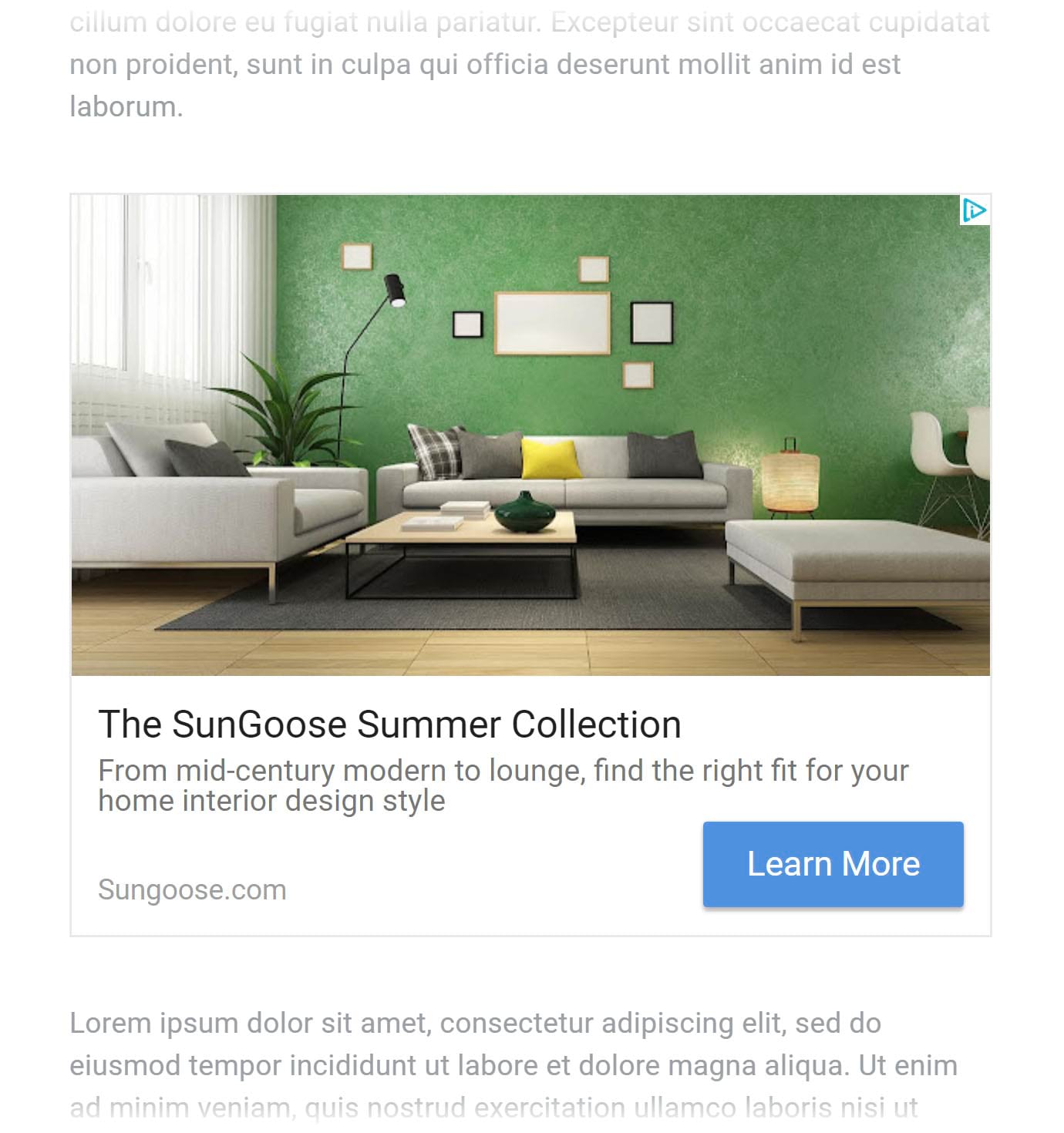
Optimized for both desktop and mobile formats, in-article ads adjust their size and layout to match the text flow.
This makes them particularly effective for maintaining user engagement while offering monetization opportunities between content sections.
Multiplex Ads
Multiplex ads display multiple advertisements within a single ad unit, arranged in a grid format. They can appear vertically and horizontally.
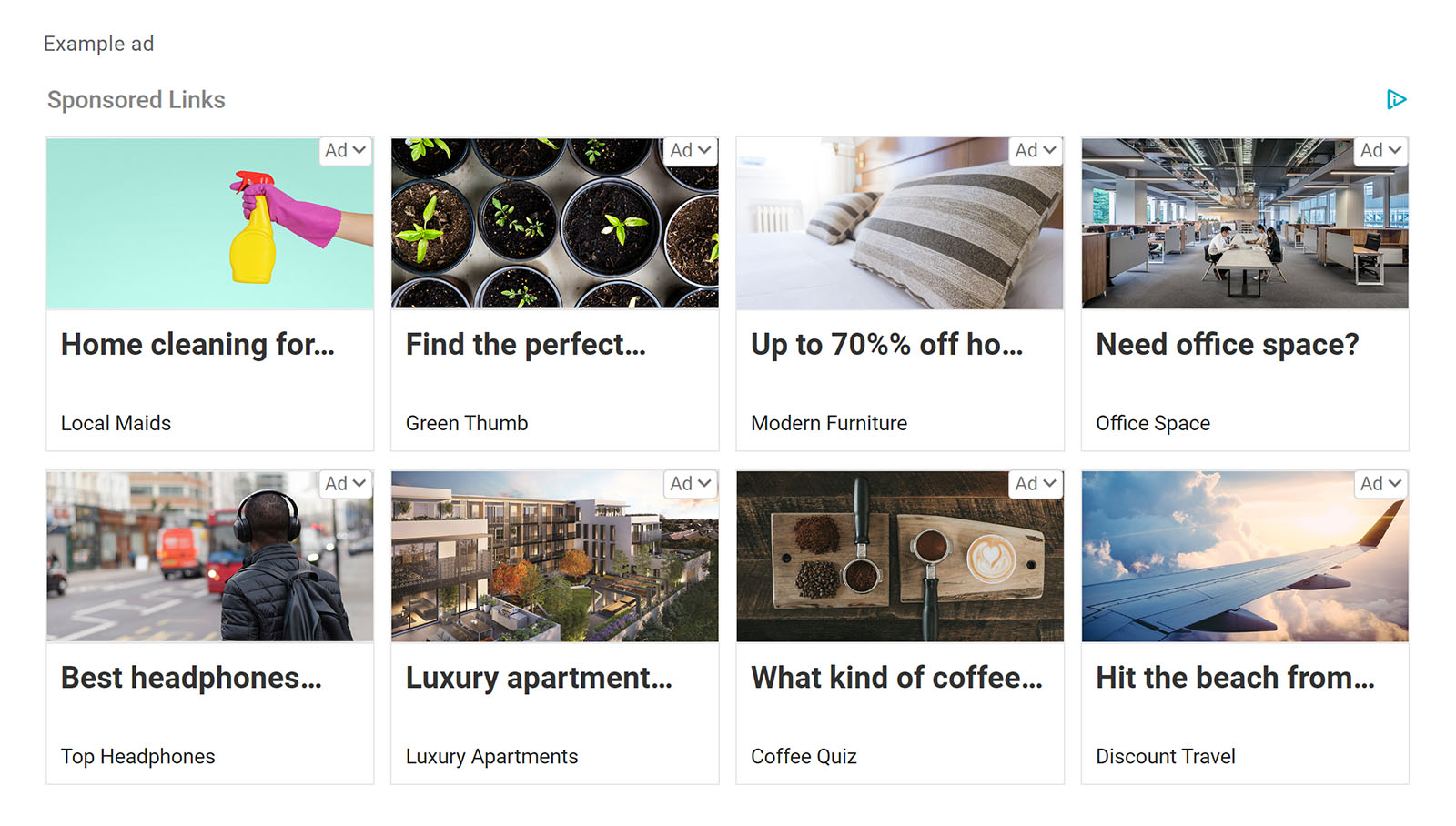
This type is useful at the end of articles or in sidebars, where it can capture the attention of users who have engaged with your content.
Multiplex ads are customizable. Allowing you to adjust their style to fit the design of your site. This provides a visually appealing way to showcase a variety of ads without overwhelming the user.
AdSense Search Engine
Search engine ads integrate a Google-powered search engine on your site that shows ads alongside search results.
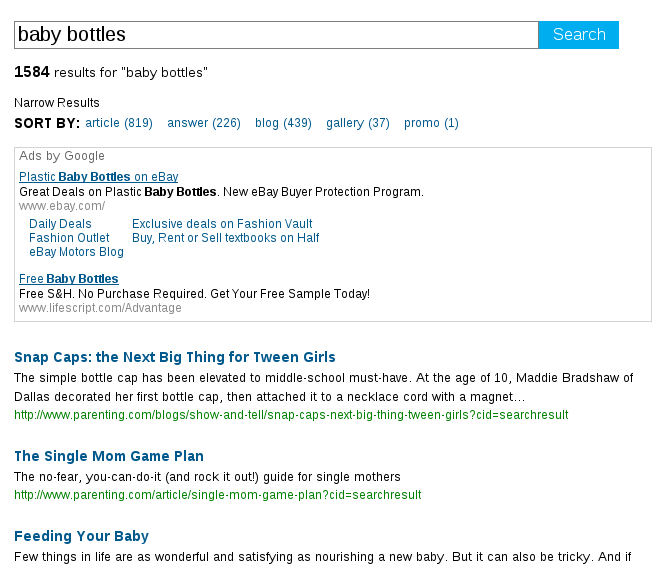
When visitors use the search feature, they see ads related to their search terms. Which increases the relevance of ads to your audience.
This ad type leverages user intent. Which potentially increases the ad interaction because users are shown ads that match their search interests.
How to Get Started with Google AdSense
To start using Google AdSense, you need a Google Account and a platform where you publish original content that complies with AdSense program policies.
Follow these steps.
Step 1: Create an AdSense Account
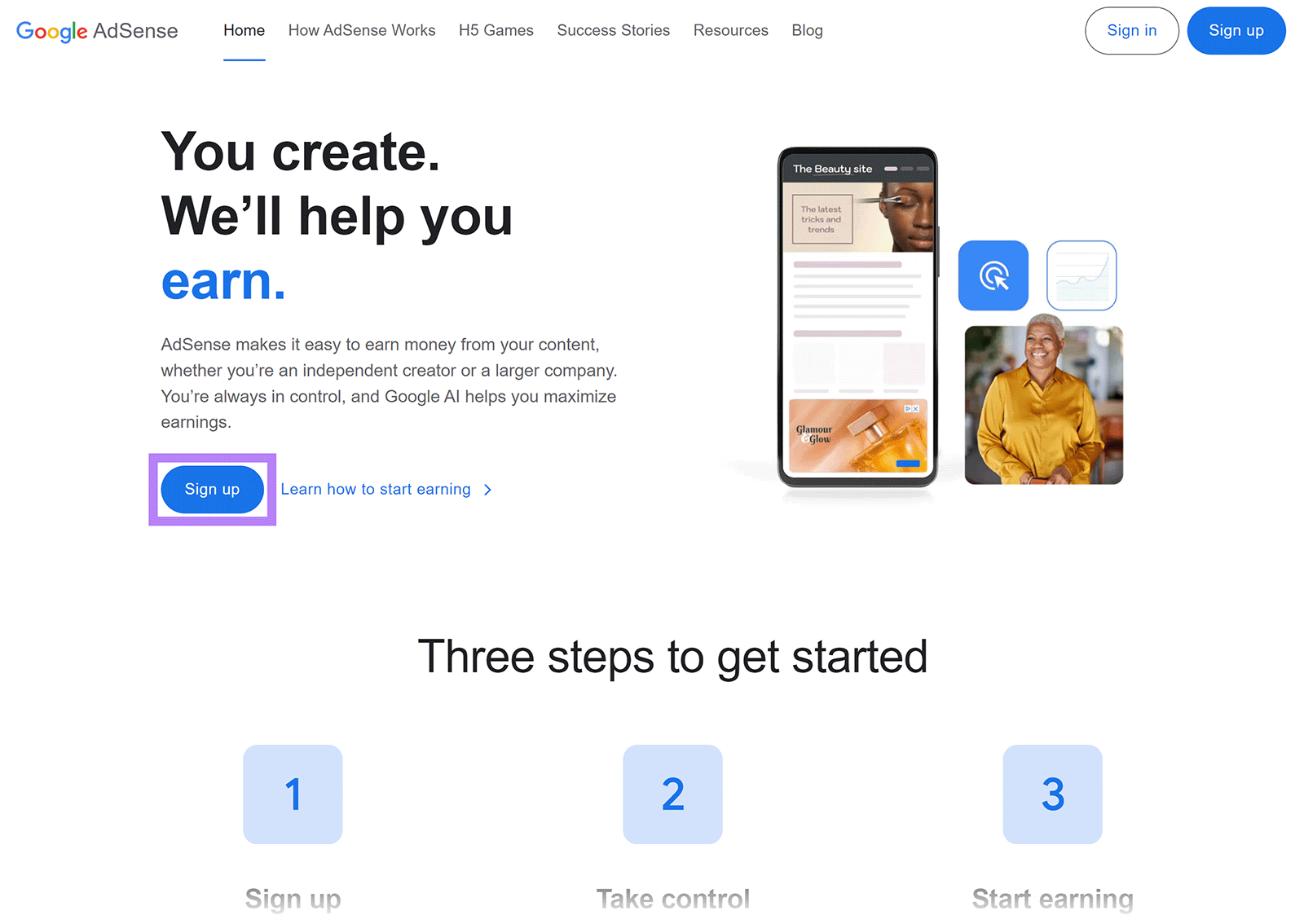
Visit the AdSense website and click “Sign up.”
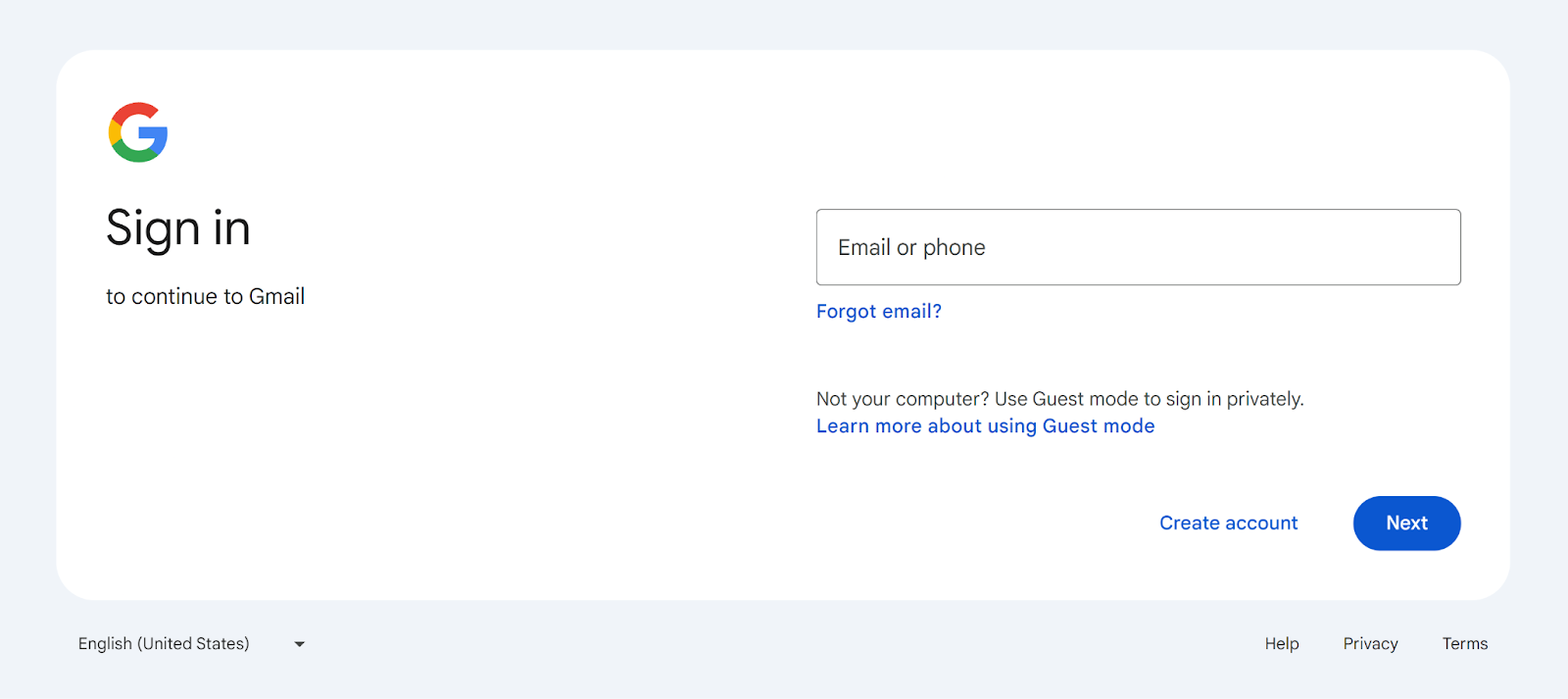
Sign in with your Google account. If you don't have a Google account, create one.
Step 2: Set Up Your Account
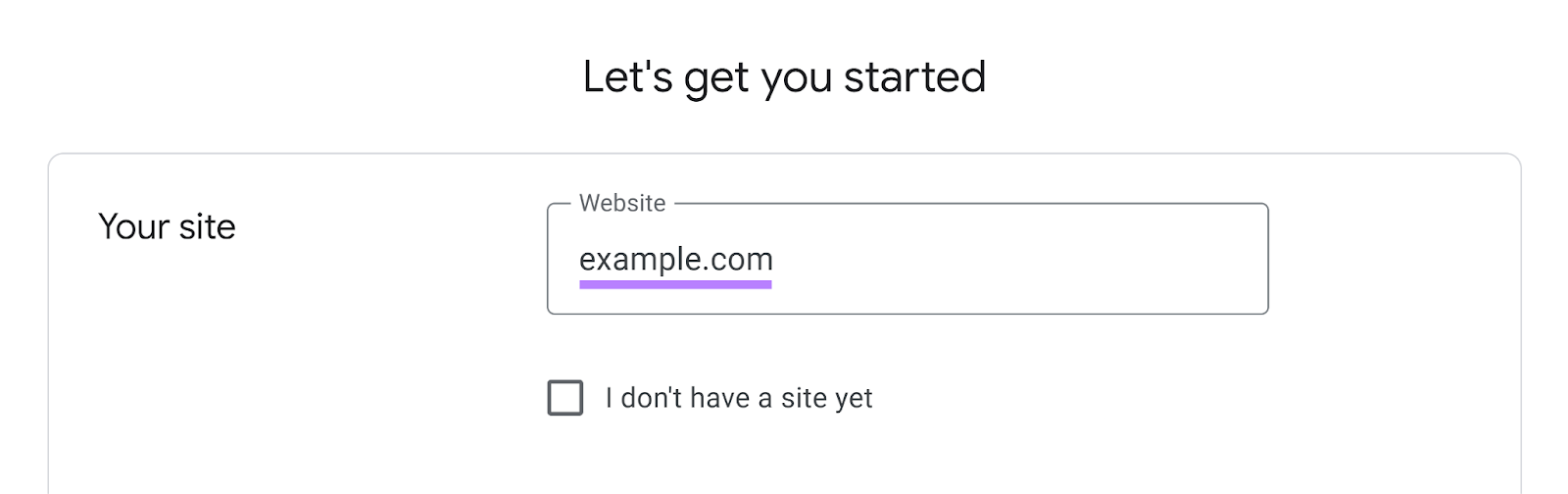
Enter your site URL where you want to show ads. You have two options here:
- Add your website URL. This is recommended if your site is ready. You'll find this site pre-added in the approval section later.
- Select "I don't have a site yet.” Choose this if your site isn't ready. You can add it later.
Select whether you want to receive customized help and performance suggestions.
